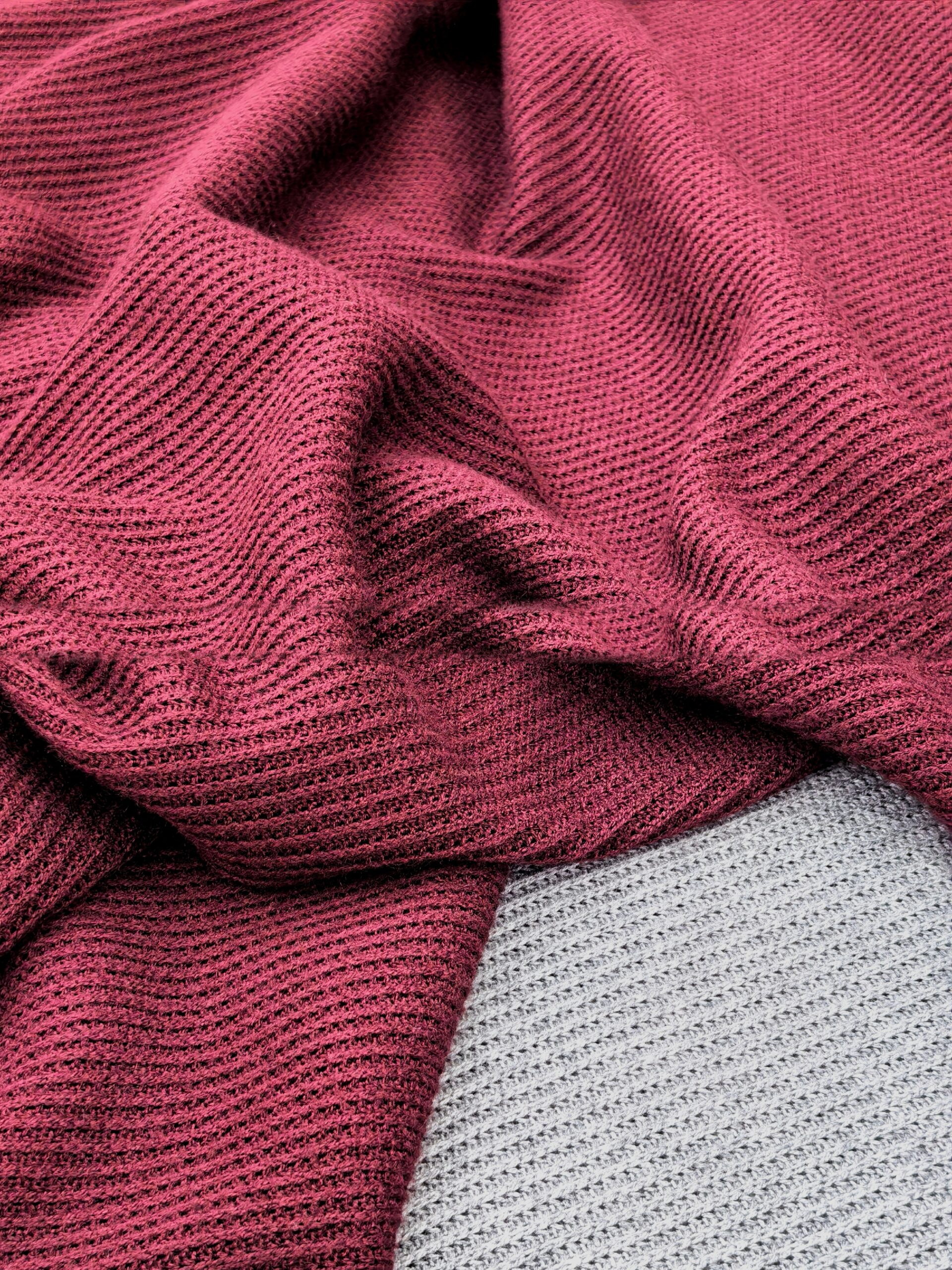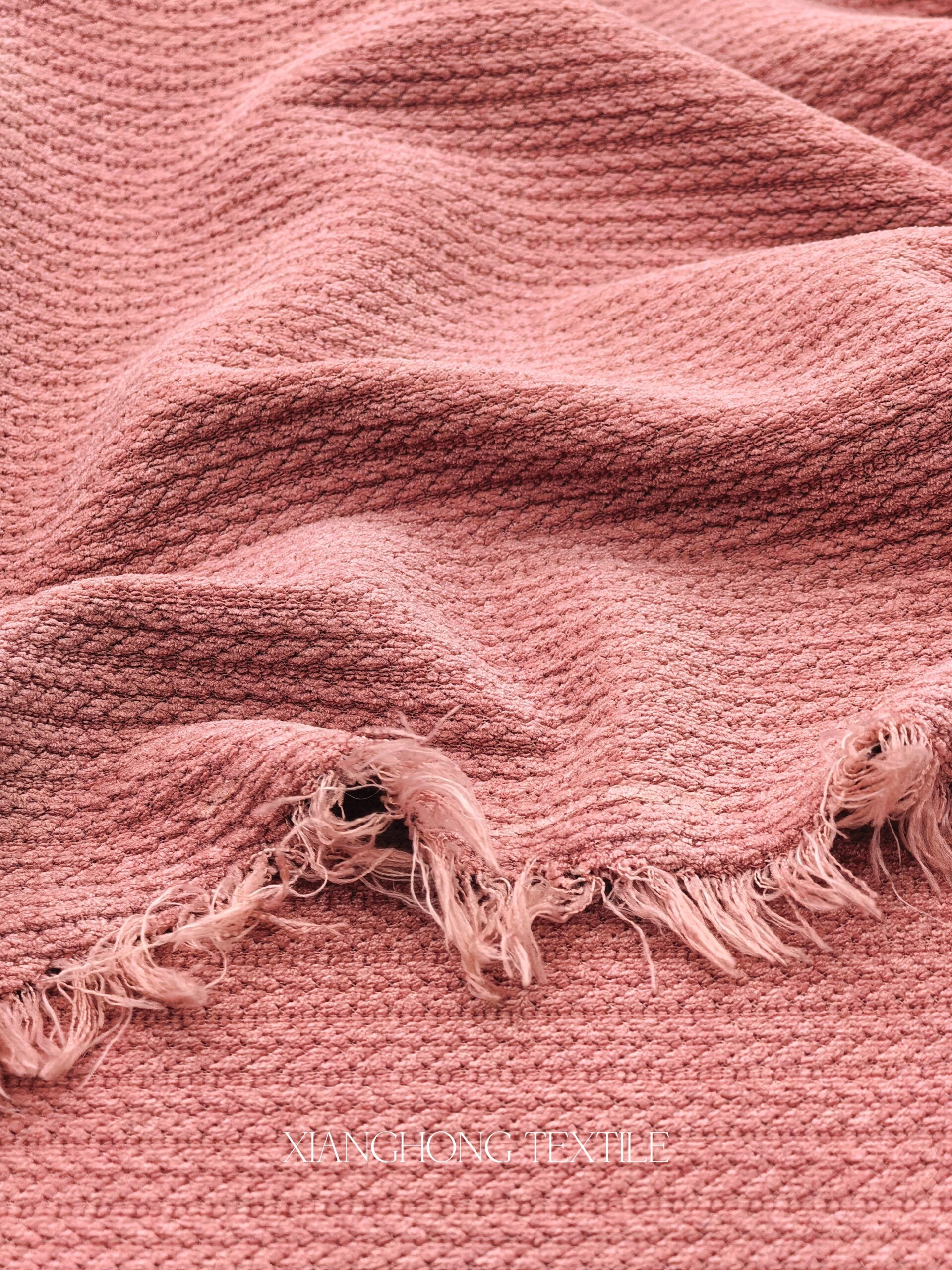
Every knitwear programme hits the same fork: buy from the mill’s stock, or dye your own colour. The answer is rarely “one is better” — it depends on your deadline, your colour target and how much you are prepared to commit.
The two routes, side by side
- Stock: minimum 1 roll, roughly 25–35 kg. Dispatched in 24–48 hours. Colour is limited to the colours the mill has already dyed.
- Custom dyeing: minimum 500 kg per colour. Lab dip in 3–5 days, bulk in 10–15 days after the dip is approved. Colour matched to your Pantone reference.
Choose stock when…
- You are sampling, building a first production run, or testing a new style with a small quantity.
- Your deadline is measured in days, not weeks.
- The mill’s stock colour is close enough to your palette that you can build the range around it.
- You want to check hand-feel, width and shrinkage on the real fabric before committing to 500 kg of a colour.
Stock is also the cheapest way to de-risk a new supplier: one roll tells you more about a mill than three rounds of email.
Choose custom dyeing when…
- The colour is part of the design — your palette, your Pantone, your season.
- You need consistent colour across several styles, and repeated across a reorder season.
- Your quantities comfortably clear 500 kg per colour, so the setup cost is absorbed.
- You need a composition or finishing tweak that only makes sense on a full dye lot.
The question that decides it: when do you need it?
Stock exists to solve speed. Custom dyeing exists to solve colour. If you need both — a specific colour, quickly — the honest answer is usually to launch the first drop in a stock colour, sell it, and place the custom dye lot for the reorder. It is a common pattern for a reason: it puts real sell-through data behind the 500 kg commitment.
How a lab dip actually works
- You send a Pantone TCX or TPG reference, or a physical swatch.
- The mill dyes a small sample on the same yarn and construction — not on a similar one.
- You receive the dip in 3–5 days and assess it in daylight.
- You approve, or ask for a correction and receive a second dip.
- Bulk is dyed to the approved dip, and the dip stays on file as the reference.
Two practical notes: approve the dip in daylight rather than on a monitor, and keep your approved dip. If a bulk lot is ever questioned, the approved dip is the document that settles it.
Colour is not the only thing you are approving
A dye lot also locks the hand-feel and the width you receive. Dyeing changes how a knit relaxes, so a colour approved on a greige swatch can behave differently after finishing. Always approve colour, GSM and cuttable width together on the same dip.
A simple decision rule
If you need metres this week and can live with the stock palette, buy stock. If the colour is non-negotiable and you have 500 kg per colour and a few weeks, dye it. If you are new to the supplier or the style, buy one roll first — it is the cheapest piece of due diligence in the whole order.
Fabrics mentioned in this article
- #2260 Wheat Ear Texture Heavyweight Knit — 95% Polyester, 5% Spandex · 300 / 400 GSM · 160 cm
- #2286 Chunky Euro-Cotton Velvet Textured Knit — 95% Polyester, 5% Spandex · 300 / 400 GSM · 165 cm
- #2603 Soft Color Striped Stretch Knit — 75% Polyester, 20% Rayon, 5% Spandex · 210 GSM · 165 cm
Need samples or pricing?
Tell us the article number, colour and quantity and we will come back within 12 hours (Mon–Sat) with pricing, stock availability and lead times. Free A4 swatch cards and hangers are available — international freight collect.
Request a quote · See all 50 knit fabrics · Shop by category