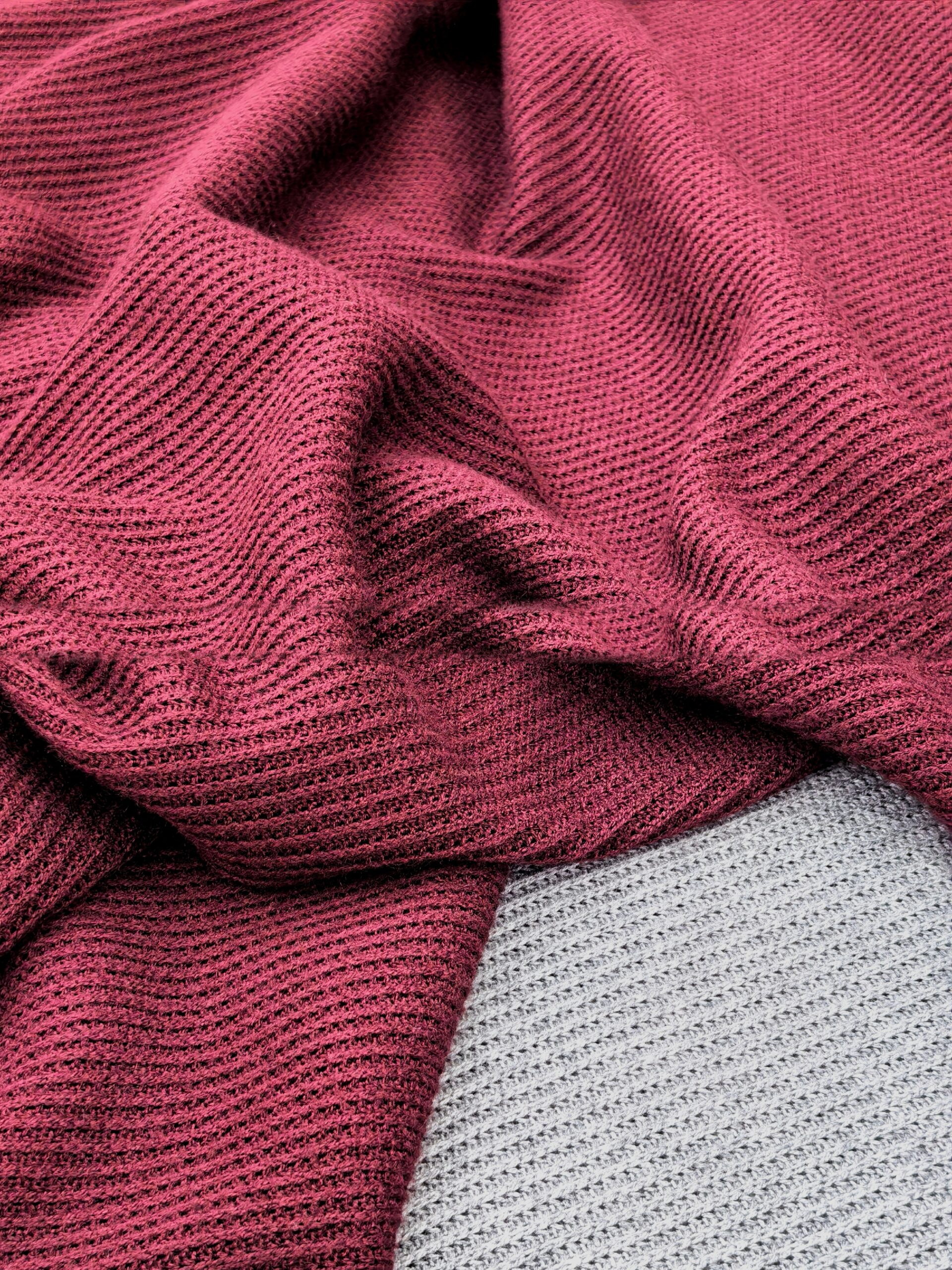
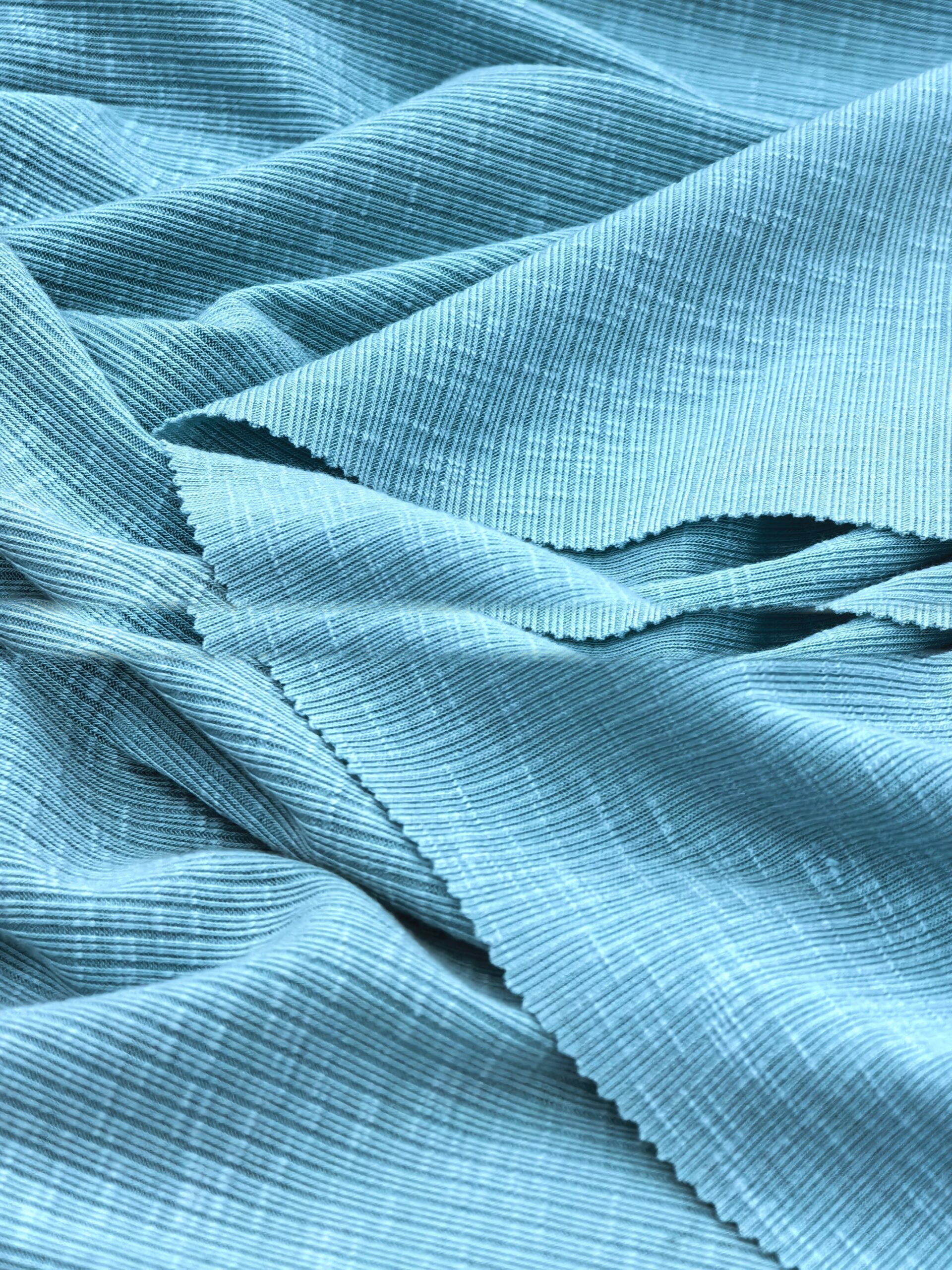
Pure cashmere still sells. It rarely carries an autumn/winter range. The fibre is expensive, supply is concentrated in a handful of origins, and minimums are quoted in hundreds of kilos per colour — a hard place to start a new cardigan, dress or co-ord set.
That is why so much of the AW26-27 womenswear offer is built on cashmere-touch knit fabric: a brushed or peached knit engineered to read soft, warm and premium on the rail, at a yarn cost a brand can plan around. This guide is for buyers who have to write a spec a mill can hit — what the parameters mean, which brushed sweater knit fabric constructions do the work, how to test what you are sent, and how buying direct from Keqiao changes your minimums.
What makes premium cashmere-touch knit fabric
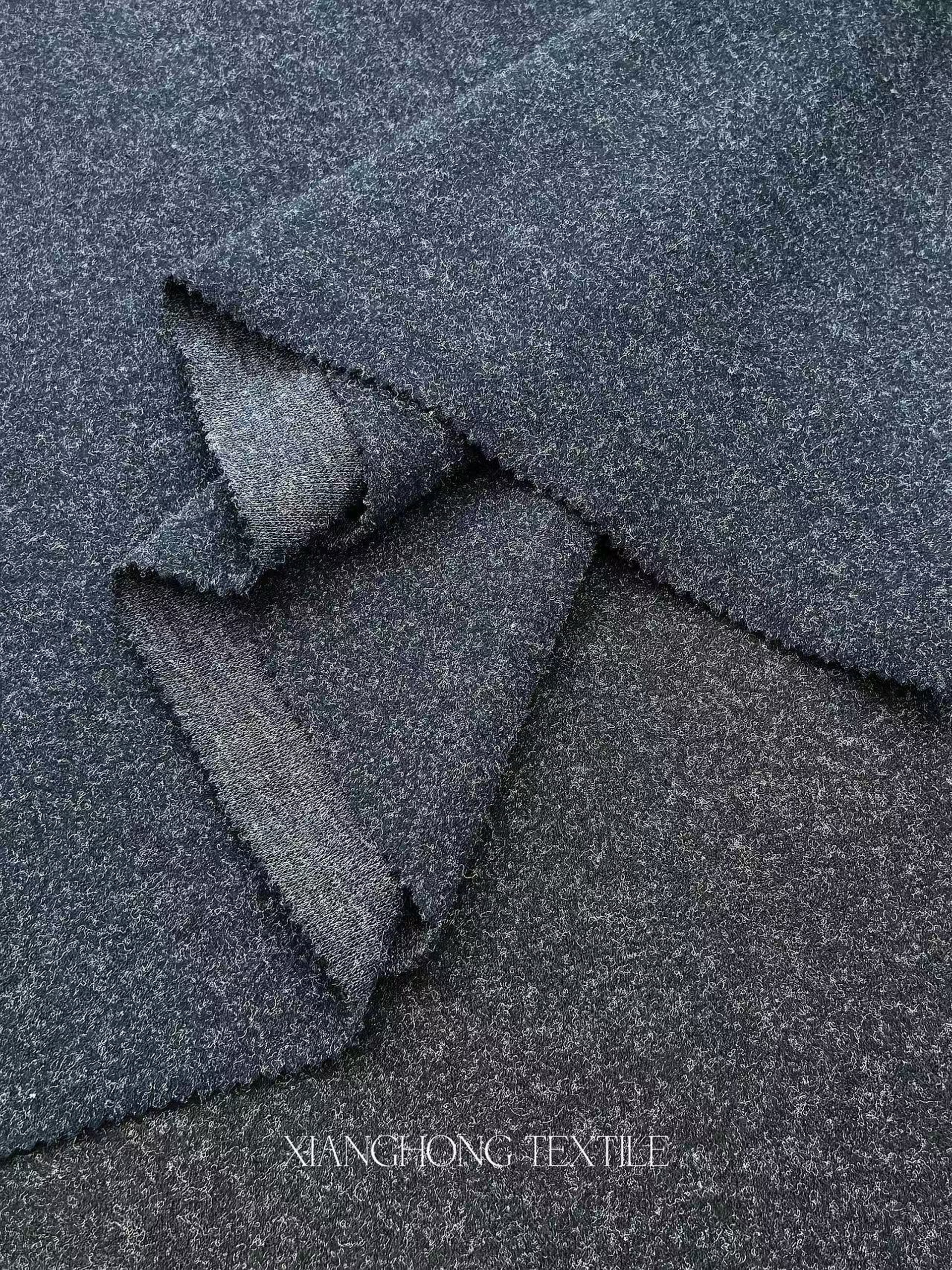
“Cashmere touch” describes a hand-feel standard, not a fibre. Four things decide whether a fabric earns the description or merely claims it.
1. Yarn count and blend. A fine, compact yarn creates the smooth, dry softness buyers associate with cashmere; look for 2/28 to 2/48 Nm. Blends typically run 30–50% rayon or viscose for drape, 20–30% nylon for strength and abrasion resistance, 5–8% elastane for recovery, and — if you want a fibre story — 5–20% wool or 2–10% genuine cashmere. Below roughly 2% cashmere the fibre adds cost without adding a defensible claim, so be clear about which of the two you are buying.
2. Brushing and finishing. Ask for a short, even nap: a long, loose nap feels luxurious in a swatch and pills in week two. Brushing depth plus a heat-set or anti-pill finish is where the cost sits in a good quality, and it is invisible in a photograph.
3. Anti-pilling performance. On the ICI pilling box scale (1–5, five is best), a commercial cashmere-touch quality should reach grade 4 or better. Pilling starts with short fibres working loose, so the fix is upstream: longer-staple yarn, tighter knit density, controlled brushing. For anti-pilling cashmere-feel fabric at 165 cm width, write the grade into the purchase order and confirm the achievable result on your article number before bulk.
4. Weight and width. The AW cashmere-touch zone sits at 260–350 GSM — heavy enough to hold a cardigan’s shape, light enough to drape on a dress. Width is the number buyers forget: our standard is 165 cm cuttable, which puts most front and back panels side by side on a marker. Heavier constructions finish narrower, so take the figure from the product page.
100% cashmere vs. cashmere-touch blend
| Factor | 100% cashmere | Cashmere-touch blend |
|---|---|---|
| Yarn cost (mill gate, indicative) | USD 150–300 / kg | USD 8–20 / kg |
| Minimum per colour | Often 500–1,000 kg | 1 roll (~25–35 kg) from stock; 500 kg custom dye |
| Lead time | 45–90 days end to end | Stock 24–48 h; small runs 7–10 days; custom dye 10–15 days |
| Care | Hand wash or dry clean; stretches easily | Cool machine wash, dry flat — far more forgiving |
| Pilling | Pills too: soft fibre, short staple | Grade 4+ when engineered correctly |
| Price point | Luxury retail | Accessible premium to mid-market |
| Where it belongs | One hero piece | Cardigans, dresses, sets — the repeatable core |
Popular knit structures for autumn/winter
Once the hand-feel standard is set, the construction decides what the garment can do. These are the four the AW qualities we knit are built on.
Brushed hacci. A fine-gauge flat knit with an airy body and a softly brushed surface, at 240–320 GSM. It drapes rather than holds and recovers well, making it the most forgiving of the four on a loose silhouette — best for knit dresses, soft cardigans, jumpsuits and layering tops. When qualifying a brushed hacci fabric supplier, judge nap and shedding first, colour second.
Brushed rib. A rib base (1×1, 2×2 or drop-needle) brushed after dyeing, at 260–320 GSM. The rib supplies vertical line and recovery, the brushed face adds warmth — best for fitted cardigans, turtlenecks, button-through dresses and co-ord sets, because recovery stops the garment growing at the elbow. Rib relaxes out, so confirm cuttable width after finishing.
Heavyweight Ponte. A double-knit with two interlocked faces: stable, opaque and almost tailoring-like at 250–350 GSM. It does not curl, needs no lining and cuts like a woven — best for knit dresses, wide-leg trousers and structured sets.
Brushed waffle. A textured cell structure brushed on one face for loft, at 260–320 GSM. It carries surface interest without print — best for cardigans, hooded knits, boxy dresses and outerwear-adjacent pieces. Waffle uses more yarn per square metre than jersey, so price it per garment.
Why sourcing direct from Keqiao mills matters
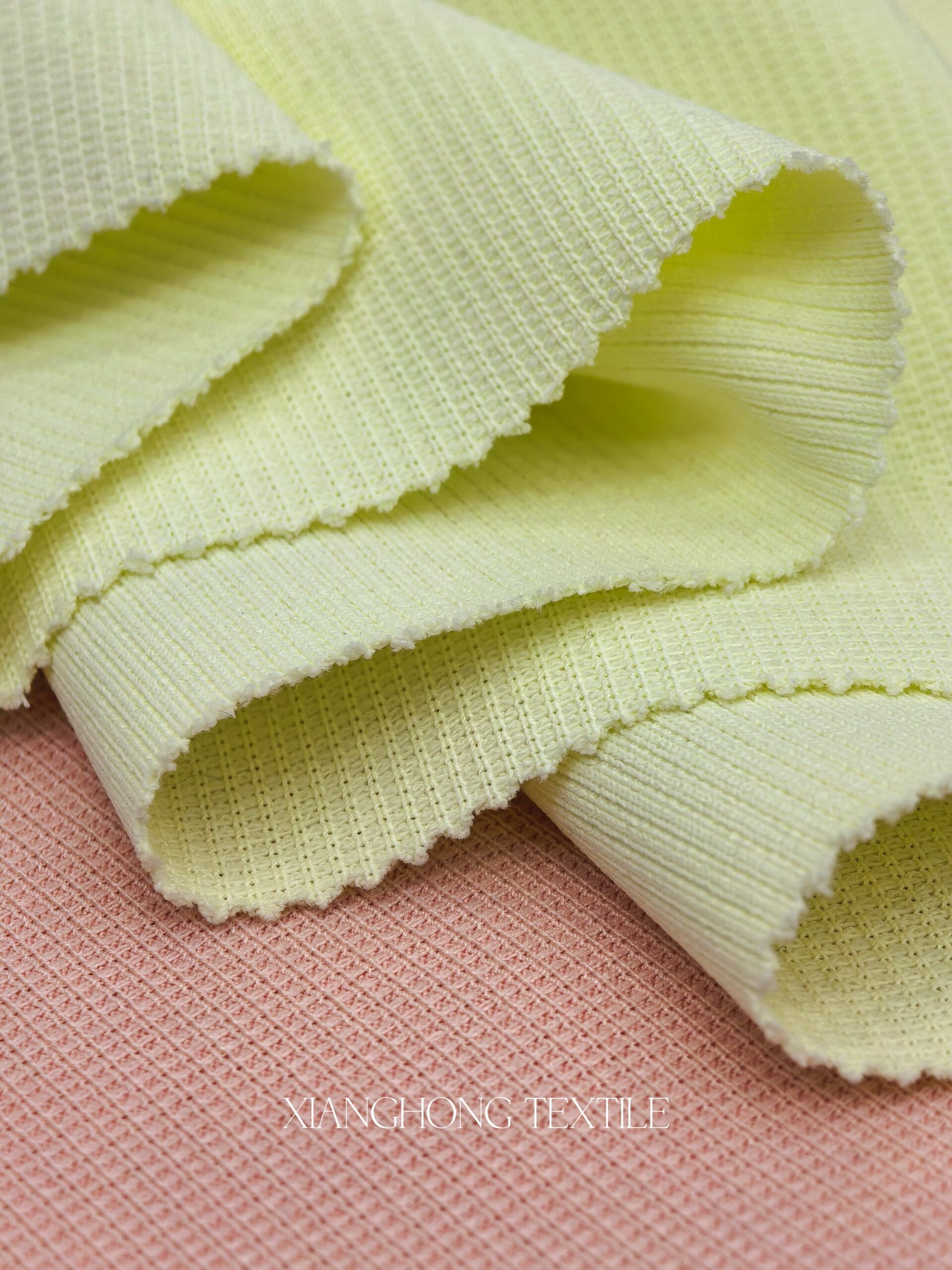
Keqiao, in Shaoxing, Zhejiang, is where yarn, knitting, dyeing and finishing for this category physically sit — Asia’s largest textile cluster, about an hour from Ningbo and Shanghai. Buying from a womenswear knitwear fabric manufacturer in Keqiao, rather than a trader three steps removed, changes the two numbers that decide whether a style launches: minimums and lead time.
- Test a style from one roll. Stock qualities start at 1 roll — roughly 25–35 kg: enough for a fit sample, a wash test and a sales sample, without committing to a dye lot. This is the low MOQ knit fabric for sampling most European brands cannot get from a vertical mill.
- Ready stock, dispatched in 24–48 hours. Brushed qualities for cardigans and dresses sit in spot inventory ex-Keqiao, and small runs or repeat lots are typically on the road within 7–10 days.
- Custom colour from 500 kg per colour. Lab dips come back in 3–5 days with Pantone matching, and bulk dyes in 10–15 days after you approve the dip.
- Capacity behind the sample. Our floor covers 8,000+ m² with 30+ circular and jacquard machines, which is why a one-roll sample is followed by a real production slot rather than a queue.
For a brand running four or five AW styles, one-roll entry plus week-scale lead times is what makes a cashmere-touch range feasible without betting the season on it.
How to evaluate quality before you commit
Four tests tell you more than a spec sheet — all of them runnable on an A4 swatch.
- Stretch and recovery. Mark 10 cm across a 10 × 10 cm square, stretch to 15 cm and hold 30 seconds. Release, wait 30 minutes, measure. A good knit returns to within about 5% of the original mark.
- Pilling. Rub the fabric against itself 50 times with firm pressure, then read the surface. Fine, sparse fibre is normal; formed pills mean short staple or over-brushing. Ask for the ICI pilling grade on that article number — grade 4 or better.
- Shedding (fibre loss). Press dark tape across the brushed face, peel it and count what it lifts; repeat after washing a 20 × 20 cm sample in a mesh bag. A well-finished knit loses a little fibre once and settles; a badly finished one keeps shedding.
- Nap and width. Hold the swatch against the light: good nap lies one way, which means every garment piece must be cut in the same direction. Measure cuttable width before and after a wash, and plan the marker on the post-wash figure.
For the two numbers that interact with everything above, see our GSM guide for women’s knitwear and our comparison of rib constructions.
FAQ: cashmere-touch knit fabric
What is the MOQ for cashmere-touch knit fabric?
1 roll — roughly 25–35 kg — for stock qualities, enough to sample, fit and wash-test. Custom dyeing starts at 500 kg per colour, with lab dips in 3–5 days and bulk in 10–15 days after approval.
What colour fastness and shrinkage should I expect?
Write three numbers into your order: colour fastness to washing of grade 4, fastness to rubbing of 3–4, and shrinkage within ±5% in length and width after three washes. Every roll is 4-point inspected and dyed with AZO-free reactive dyes before dispatch, and the exact tolerance for your article number is confirmed on the order — ask for it in writing.
Can you send A4 physical swatches?
Yes. We send free A4 swatch cards and swatch hangers, freight collect, so you can judge hand-feel and colour in daylight — the only honest way to assess a brushed fabric. Send the article numbers and colours you are considering and we will include stock availability for each.
Do you develop OEM/ODM colours, compositions and weights?
Yes. Pantone matching, composition tweaks and weight changes run through the same lab-dip route, from 500 kg per colour. Send the spec and the quantity; we confirm feasibility, price and lead time before you commit.
Get your free A4 swatch hanger
Send the article numbers, the colours you are working to and your target quantity. We reply within 12 hours (Mon–Sat) with stock availability, USD per kg pricing and lead times — plus a free A4 swatch hanger so you can feel the fabric before you order.
Contact us → | WhatsApp us | Request a quote | See all 50 knit fabrics
Fabrics mentioned in this article
- #2527 Brushed Fuzzy Starry Texture Knit — 92% Polyester, 8% Rayon · 280 GSM · 165 cm
- #2538 Silk-Touch Wool Blend Fine Knit — 25% Polyester, 48% Rayon, 6% Spandex, 21% Nylon · 270 GSM · 165 cm
- #2409 Boucle Wool-Blend Looped Knit — 71% Polyester, 17% Rayon, 5% Nylon, 2% Wool · 280 GSM · 165 cm
- #2209 Sculpted 3D Waffle Thermal Knit — 95% Polyester, 5% Spandex · 260 GSM · 165 cm
- #2605 Premium Drop-Needle Ribbed Knit — 81% Polyester, 8% Rayon, 8% Tencel, 3% Lurex · 230 GSM · 165 cm
- #2399 Diamond Twill Rayon Spandex Stretch Knit — 95% Rayon, 5% Spandex · 280 GSM · 165 cm
- #2110 Emerald Fine Striped Stretch Knit — 95% Polyester, 5% Spandex · 180 GSM · 165 cm
Related reading
- Brushed Sweater Knit Fabric: Hacci, Brushed Rib, Ponte and Waffle Compared for AW Womenswear
- Wholesale Cashmere-Like Knit Fabric from Keqiao: Low MOQ, Ready Stock and Custom Dyeing Explained
- GSM guide: choosing the right fabric weight for women’s knitwear
- Request a quote — reply within 12 hours (Mon–Sat)
- Bouclé, Cable and Chevron: How Loop and Transfer Stitches Build the Cashmere Look
- The Weight Ladder: Choosing 250–400 gsm Cashmere-Feel Knits by Garment
- From Roll to Garment: Cutting, Sewing and Pressing a Cashmere-Feel Knit Range