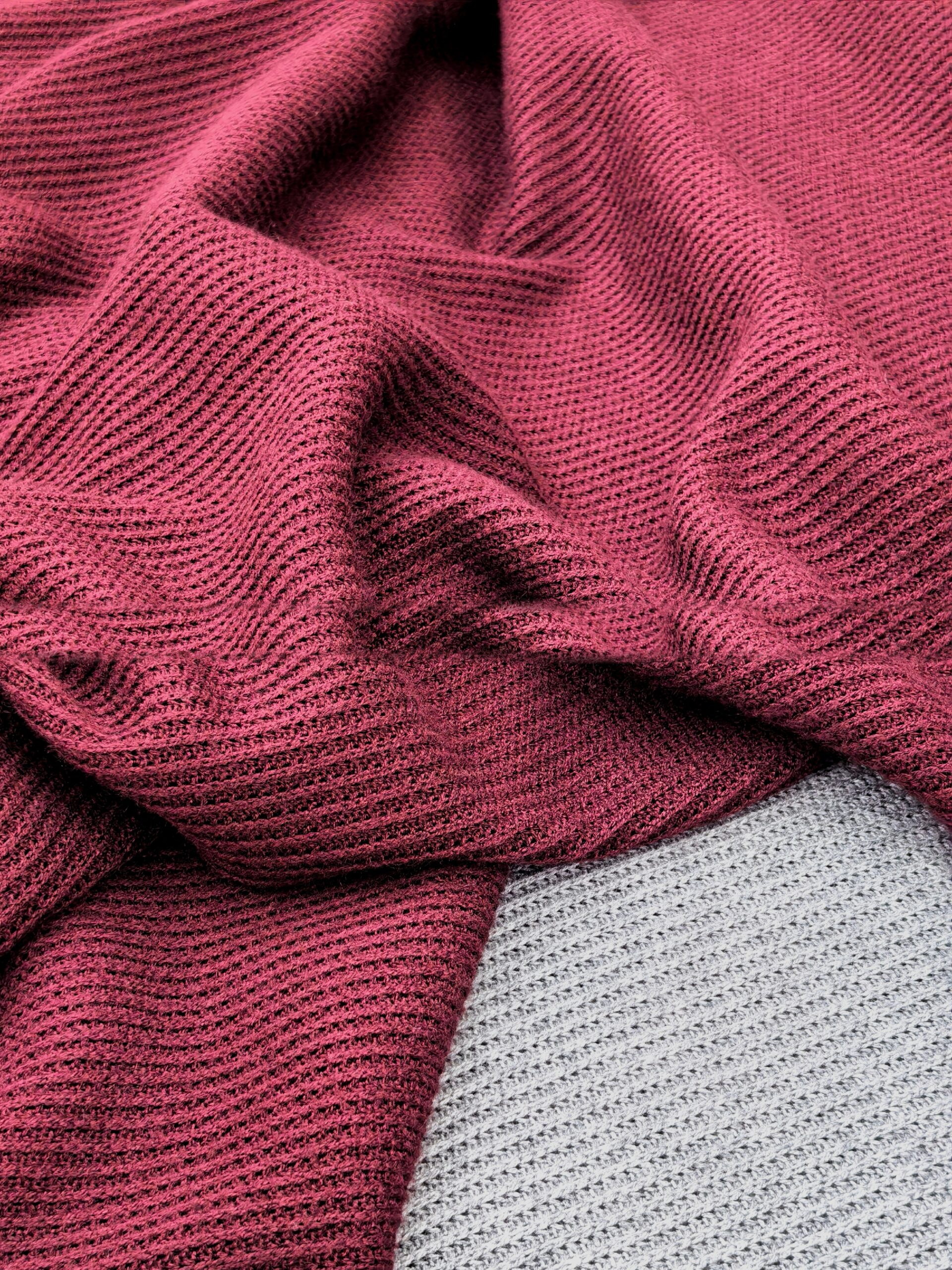
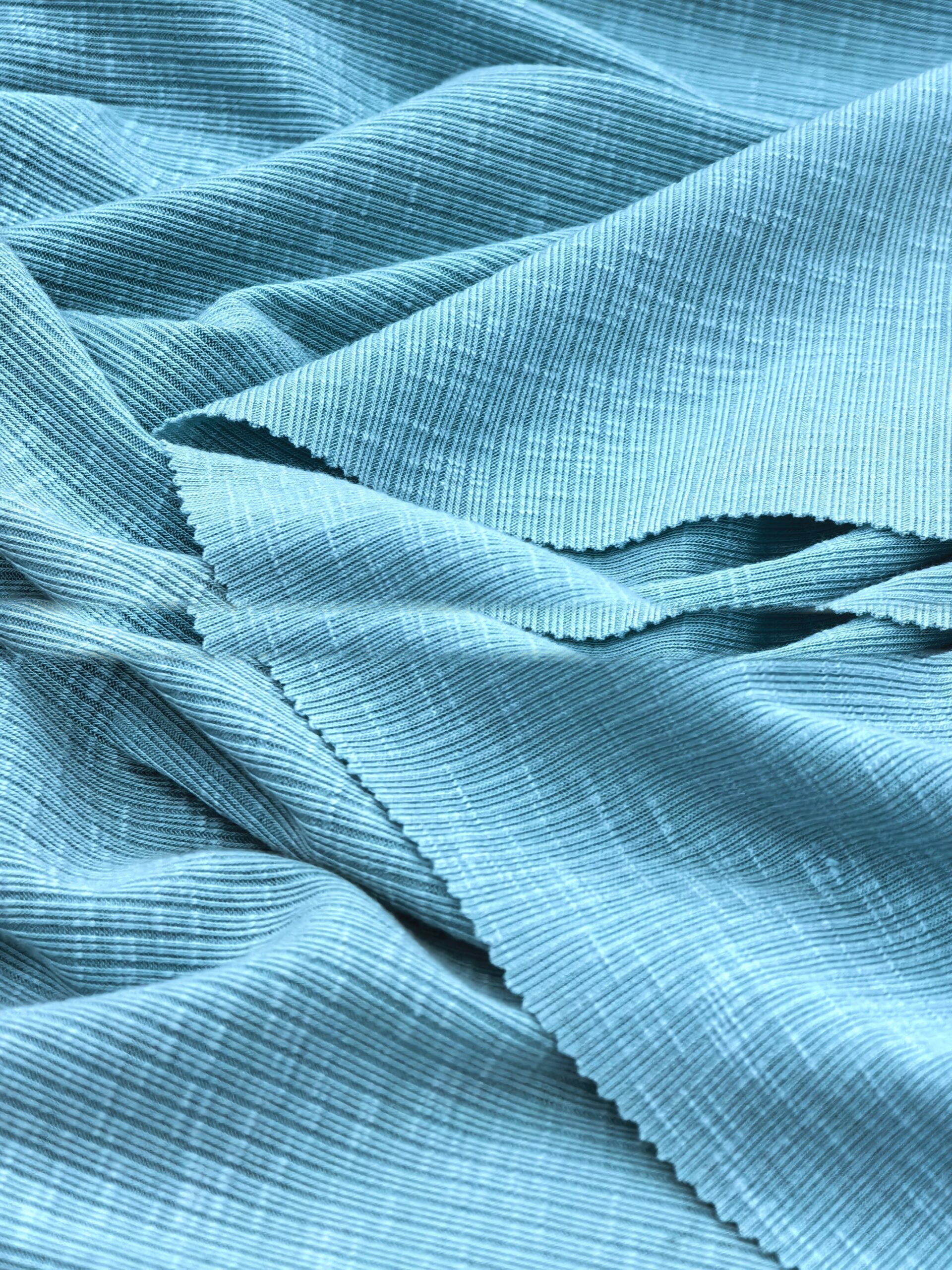
Buyers negotiate hard on price per kilogram and almost never negotiate width. That is a mistake, because width decides how much fabric each garment actually consumes — and a 10 cm difference on a marker is worth more than most of the price concessions on the table.
Cuttable width is not greige width
Fabric comes off the machine at greige width, then relaxes, dyes and finishes. What your cutting room can use is the cuttable width after finishing — and that is the only number that belongs in a marker plan. Always ask for cuttable width after finishing, and confirm it on the first bulk roll.
Why 165 cm is a practical standard
Across womenswear knit ranges, 165 cm finished width sits in a useful spot: it takes most front and back panels side by side for dresses and tops, and it leaves sensible offcuts for trims. That is why it is the standard width across most of our range, and why we publish it as the headline figure on every product page.
It is not universal. Heavier chunky ribs and some jacquard constructions finish narrower — from about 150 cm — because the structure pulls in as it relaxes. Open-width thermal jerseys can finish wider, up to about 185 cm. Both can be perfectly good fabrics; they simply plan differently.
The three numbers that interact
- Cuttable width: how wide the usable fabric is.
- Shrinkage: how much it moves after the first wash or a garment wash.
- Consumption: the metres per garment your marker actually needs.
Change any one and the other two move. A fabric that finishes at 165 cm but shrinks 6% lengthwise behaves, in the cutting room, like a different fabric from one that shrinks 2%.
How to plan a marker against a knit
- Ask for the width after finishing and after any wash the garment will receive.
- Ask for length and width shrinkage separately — they are rarely the same.
- Build in the selvedge: the usable width is inside the finished width, not equal to it.
- Test on your own table with a single roll before you commit bulk metres.
When a narrower fabric is the better buy
A 150 cm rib at a lower price per kilogram can still cost more per garment than a 165 cm rib at a higher price, because you cut more metres. Run the comparison on cost per garment, not cost per kilogram. Equally, a 185 cm open-width jersey can win comfortably on a very wide pattern piece, even at a higher kilo price.
What we publish, and why
Every product page on this site lists the exact cuttable width alongside GSM and composition, because those three numbers together are what a buyer actually needs to quote a garment. Where an article runs narrower or wider than our 165 cm standard, the page says so.
If you are planning a range and want to check widths before you build a marker, send us the article numbers and we will confirm width, shrinkage and stock colour availability the same working day.
Fabrics mentioned in this article
- #2508 Linen Blend Slub Airy Knit — 90% Nylon, 10% Linen · 220 GSM · 160 cm
- #2178 Solid Dralon Thermal Smooth Jersey — 95% Polyester, 5% Spandex · 250 GSM · 185 cm
- #2170 Wide Chunky Ribbed Knit Fabric — 95% Polyester, 5% Spandex · 230 GSM · 160 cm
Need samples or pricing?
Tell us the article number, colour and quantity and we will come back within 12 hours (Mon–Sat) with pricing, stock availability and lead times. Free A4 swatch cards and hangers are available — international freight collect.
Request a quote · See all 50 knit fabrics · Shop by category